
AI for Oil & Gas · Upstream · Midstream · Downstream
Keep your infrastructure. Make it intelligent.
- Read-only to control systems
- On your servers or in a Saudi region
- Engineer approval on every action
- Arabic and English
04 · WORKFLOWS
Operations
→ Handover drafted
awaiting engineer approval
Reliability
→ Bad actors ranked
awaiting engineer approval
Engineering
→ P&ID answer, cited
awaiting engineer approval
Maintenance
→ SAP PM notification
awaiting engineer approval
Drilling
→ Stick-slip flagged
awaiting engineer approval
Production
→ W-106 explained
awaiting engineer approval
03 · HARNESS
VOHO INDUSTRIAL AI HARNESS
CONNECT · REASON · PREDICT · ACT
TOOLS
PI · SAP PM · WITSML calls
MEMORY
Asset history · past events
MODELS
LLM · ML · CV · physics
AGENTS
One per discipline
WORKFLOWS
Investigate → recommend → raise
PERMISSIONS
Inherited from the user
EVALUATIONS
Scored on your plant history
MODEL ROUTING · CONTEXT · RAG · GUARDRAILS · HUMAN APPROVALS · AUDIT TRAIL · OBSERVABILITY
02 · SYSTEMS OF RECORD
01 · DIGITAL TWIN
Swipe the drawing sideways.
One AI layer. Every operational system. Read it from the plant up.
The Voho Industrial AI Harness
Models alone don’t understand your operation.
A foundation model has never seen your P&IDs, your tag names or your maintenance history, and it has no business touching SAP on its own. Voho is not a collection of AI apps. It is one reusable harness that connects models and agents to the systems, data, tools and workflows already running inside your company, and governs what they are allowed to do there.
A model on its own
- Guesses what TT-3104 means
- Cannot see the historian or the work orders
- Answers without citing a source
- No idea who is asking or what they may see
- Nothing to act on, or worse, acts unchecked
The same model, in the harness
- Resolves the tag against your PI asset framework
- Calls PI, SAP PM and the document store as tools
- Cites the trend, the work order and the manual page
- Inherits the engineer’s permissions
- Drafts the action, then waits for approval
Industrial systems
What you already run, left in place
- SAP
- SAP PM
- SCADA
- DCS
- AVEVA / OSIsoft PI
- CMMS / Maximo
- OPC UA
- MQTT
- WITSML
- OSDU
- Engineering documents
- Operational databases
- Sensors / IoT
Voho Industrial AI Harness
The runtime between your systems and the models
- Tool calling
- Model routing
- Industrial connectors
- Memory
- Context
- RAG
- Workflow orchestration
- Permissions
- Human approvals
- Evaluations
- Guardrails
- Audit trails
- Observability
Model layer
Routed per task, never one model for everything
- Foundation models / LLMs
- Specialised ML models
- Time-series models
- Computer vision
- Your own models
- Physics & simulation models
Agent layer
Scoped to one discipline each
- Operations Agent
- Reliability Agent
- Maintenance Agent
- Engineering Agent
- Drilling Agent
- Production Agent
- HSE Agent
Operational workflows
Where the work lands
- Engineering
- Maintenance
- Reliability
- Drilling
- Production
- Operations
- HSE
01
Connect.
Historians, SCADA, SAP PM, Maximo, WITSML and OSDU read through governed connectors. Nothing is copied into a new data lake to get started.
02
Reason.
Agents pull the tag trend, the work-order history and the OEM manual into one context, and cite every source they used.
03
Predict.
Time-series, vibration and physics models are called as tools, so a forecast arrives with the model that made it and its confidence.
04
Act.
Notifications, work orders and handover notes are drafted in the system that owns them, and only committed after an engineer approves.
01 · Drilling intelligence
Read the well while it is being drilled.
WITSML channels stream into the harness second by second. The Drilling Agent watches ROP, WOB, RPM, torque, standpipe pressure, flow and vibration together, compares them with offset wells and the daily drilling reports, and tells the driller what it sees before it becomes non-productive time.
Stick-slip onset at 2,847 m MD. Torque and lateral vibration are oscillating in phase while ROP falls with WOB unchanged.
Suggested: reduce WOB 18 → 15 klbf and raise surface RPM 122 → 140. Offset well HZ-09 saw the same signature in this carbonate and recovered on the same change.
Evidence: WITSML log · HZ-09 DDR day 11 · BHA run 4 · Driller approval required
02 · Predictive maintenance
The failure is in the trend. The fix is in the history.
Vibration, temperature and pressure from the historian, the asset’s position on its operating envelope, and every SAP PM notification ever raised against it, read together. The agent does not just score an anomaly; it tells you which past event it looks like and what fixed it then.
Asset health
62/100
Anomaly score
0.87
Operating envelope
Surge margin 11% · min 10%
SAP PM maintenance history · correlated
Signature matches 3 of 4 past events
WO-77420 · Aug 2024
Intercooler fouling. Cleaned, discharge temp normal.
WO-79015 · Nov 2024
Lube-oil filter change, routine.
WO-81190 · Feb 2025
Repeat high discharge temp. Intercooler tubes cleaned.
WO-83302 · Jun 2025
DE bearing replaced after vibration trip.
03 · Production intelligence
Every well, separator and pipeline as one network.
Flow, pressure, temperature, rates and well status from SCADA and the historian, joined with allocation and well-test results. When a well drifts, the Production Agent explains why, in the terms a production engineer would use, and proposes the test that confirms it.
04 · Agentic maintenance workflow
From alarm to approved work order, with the evidence attached.
This is what an agent in the harness actually does. Each step is a governed tool call into a system you already own, logged as it happens. It stops at the approval gate: nothing is written to SAP PM until an engineer says so. Try it.
- 1
Sensor anomaly
PI event frame
alarm VT-3101 HI · TT-3104 HI
- 2
PI Historian queried
AVEVA PI
pi.query(tags=[VT-3101, TT-3104, PT-3102, TT-3120], window="30d")
- 3
SAP PM history queried
SAP PM
sap_pm.notifications(equipment="K-201", since="2022-09")
- 4
OEM manual retrieved
Document store
docs.search("K-201 intercooler inspection interval")
- 5
Predictive models called
Model registry
models.run(["e201_fouling_v3", "k201_bearing_rul_v2"])
- 6
Agent correlates evidence
Maintenance Agent
correlate(trend, history, manual, models)
- 7
Engineer receives recommendation
Reliability engineer · on shift
notify(role="rotating-equipment", evidence=6)
- 8
Human approval
Approval gate
await approve(engineer)
- 9
SAP maintenance notification created
SAP PM
sap_pm.create_notification(type="M2", priority=2, equipment="K-201")
Evidence board
PI · 30 day trend
SAP PM · K-201 history
OEM manual · Rev 4 · p. 61
Intercooler tube bundle shall be inspected and cleaned at intervals not exceeding 4,000 running hours.
2,850 h overdue
Model outputs
Fouling probability
0.82
DE bearing RUL
19–26 d
Recommendation
Clean E-201 and inspect the DE bearing in one outage within 7 days.
6 sources cited · confidence high · no control-system writes
05 · Field operations
The inspection that fills itself in.
A technician standing at the machine will not fill in a form, and should not have to. He talks, in Arabic, on the phone already in his pocket. The template is recognised, the findings are structured, the isolation is confirmed rather than assumed, the photographs arrive, and the work order is raised in SAP PM with the record attached. LOTO, JSA, permits and inspections, without an app.
WhatsApp voice · Saudi Arabic
Inspection record
template · recognising…
Asset
—
Location
—
Isolation · LOTO
—
Findings
—
Photographs
requested
Record completes when the technician finishes talking.
06 · Permits and safety documents
The permit is prepared by voice. It is signed by a person.
A permit filled in by habit is how people get hurt. This one fills only from what the issuing supervisor actually says, asks for the gas readings by number when they are not mentioned, refuses to tick a control that was not confirmed, and stops at the signature. Voho prepares the permit; the area authority authorises the work.
Radio · Saudi Arabic
Permit PTW-2026-08814
filling from the conversation
A control is ticked only when it was said. Nothing is ticked by default.
The permit reaches the area authority when the supervisor finishes.
Everything a field team fills in today — LOTO, JSA, permits to work, inspections, incident and spill reports — on the same mechanism. See field operations for the full picture across sectors.
Across the value chain
One harness. Upstream to downstream.
The connectors, permissions and evaluations are built once. Each new use case is a new agent and a new workflow on the same foundation, not a new project.
Upstream
Drilling, completions, reservoir and production
- Real-time drilling advisory on WITSML streams: stick-slip, stuck-pipe and washout risk
- Daily drilling report and end-of-well summaries drafted from rig data
- Well-test and production-allocation anomalies explained, well by well
- ESP and artificial-lift health from current, frequency and intake pressure
- OSDU-indexed well files, logs and core reports answerable in one question
Midstream
Pipelines, compression, storage and terminals
- Compressor and pump health scored against their operating envelope
- Pipeline pressure and flow deviations traced to the segment and the cause
- Integrity and inspection reports read and tied back to the asset register
- Permit-to-work and isolation checks against the current P&ID revision
- Shift handovers written from the alarm log, not from memory
Downstream
Refining, processing and petrochemicals
- Bad-actor lists ranked from DCS alarms and SAP PM failure codes
- Heat-exchanger fouling and furnace efficiency tracked against design
- Turnaround scope assembled from work orders, inspections and deferrals
- Operating procedures and MOC records searchable with citations
- HSE incident reports classified and linked to similar past events
Industrial connectors
One AI layer. Every operational system.
No rip and replace, and no new data lake before the first result. The harness reads the systems of record where they are, through connectors your OT security team can review.
AVEVA / OSIsoft PI
Tags, event frames, asset framework
SAP / SAP PM
Equipment, notifications, work orders
SCADA / DCS
Alarms and live values, read-only
Maximo / CMMS
Asset history and failure codes
OPC UA / MQTT
Plant-floor and IoT streams
WITSML
Real-time drilling data
OSDU
Wells, logs and subsurface records
Engineering documents
P&IDs, manuals, procedures, MOCs
Built for operating facilities
Safe enough for a plant, not just a demo.
Energy companies do not adopt AI that can act without limits. Every boundary below is part of the harness, not a policy document beside it.
Read-only to the control layer
Voho reads SCADA, DCS and historian data. It never writes a setpoint or touches a safety system. Actions go to business systems such as SAP PM, and only after approval.
Inside your network
Run it in our cloud, in a Saudi region, or on your own servers, including sites with no outbound internet. Models run where the data is.
Permissions you already have
Each agent inherits the access of the person using it. A contractor who cannot open a drawing in the document system cannot ask about it either.
Evaluated on your history
Before an agent goes live it is scored against past events from your own plant: known failures, known false alarms, known answers.
Every step on the record
Each query, tool call, model output and approval is logged with who, what and which source, and can be streamed to your SIEM.
Engineers in the loop
Recommendations carry their evidence. Nothing is raised, closed or scheduled until a named engineer signs it off.
From the library
What this would look like at companies you know.
Demonstrations, not customer work. We built five agents for each of these organisations from public knowledge of how they run; none of them asked, and none of them run this today. Open one to see this page’s argument applied to a energy or petrochemical company you recognise.
Saudi Aramco
Energy
The largest energy company in the world, and an operation where the paperwork moves as much value as the pipelines.
Run the demos →SABIC
Petrochemicals
One of the world’s largest petrochemical producers, with plants across Jubail, Yanbu and global joint ventures.
Run the demos →Yanbu National Petrochemical (Yansab)
Petrochemicals
A single-site olefins and polymers complex on the Red Sea coast, one plant, continuous operation, and customers on three continents.
Run the demos →ADES Holding
Energy
Offshore and onshore drilling across several countries, where a crew rotation problem in one jurisdiction stops a rig in another.
Run the demos →Advanced Petrochemical Company
Petrochemicals
A single product propylene and polypropylene producer, where the whole business depends on one plant staying on line and one feedstock arriving.
Run the demos →Aldrees Petroleum and Transport Services
Energy
Fuel retail and transport, where a fleet customer’s question is whether the litres billed are the litres delivered.
Run the demos →Arabian Drilling Company (ADC)
Energy
Drilling contracting, where the call that matters comes from a rig at three in the morning and the cost of getting it wrong is measured in days.
Run the demos →Petro Rabigh
Petrochemicals
An integrated refining and petrochemical complex, where a single unit trip propagates through a chain of downstream plants within minutes.
Run the demos →How a project runs
Start with one asset. Keep the harness.
The first project proves value on something measurable. Everything it builds, the connectors, the permissions, the evaluation set, carries into the next.
01
Pick one asset or workflow
A compressor train, a drilling campaign, a set of wells. Somewhere the value is easy to measure and the data already exists.
02
Connect the harness
Read-only connectors to the historian, SAP PM and the document system, inside your network, reviewed by your OT security team.
03
Evaluate against past events
Replay the last failures and near-misses. The agents are measured on whether they would have caught them, and how noisily.
04
Go live, then widen
Engineers use it on shift with approvals on. The next asset class reuses the same harness, so it is configuration, not a new project.
Who you are dealing with
A team that has already cleared an operator’s bar.
Procurement at an energy company is the longest part of any AI project, and it is the part most vendors have never been through. We have. What follows is the record, the people accountable for it, and the partner whose oilfield software the harness sits on.
100,000
Residents served by the smart-city call centre Voho runs for Saudi Aramco
Contracted and in delivery, to Aramco’s procurement and security bar
3
Open Saudi speech and dialect models, published with held-out evaluations
Speech to text, spoken Najdi, and formal-to-spoken rewriting, on Hugging Face
8
Industrial systems of record read through governed connectors
PI, SAP PM, SCADA, Maximo, OPC UA, WITSML, OSDU and engineering documents
24 yrs
Of oilfield software behind the harness, through our partner VictorySoft
Founded 2002 out of Sinopec’s Shengli information centre; 100,000+ wells served
Leadership
The people you will actually be working with.

Asfandyar Malik
Chief Executive Officer
Leads the company and the Aramco engagement. Before Voho, AI transformation at Porsche Deutschland, and co-founder of Culturly, acquired by Dreamteam. Electrical engineering and computer science, Jacobs University Bremen.


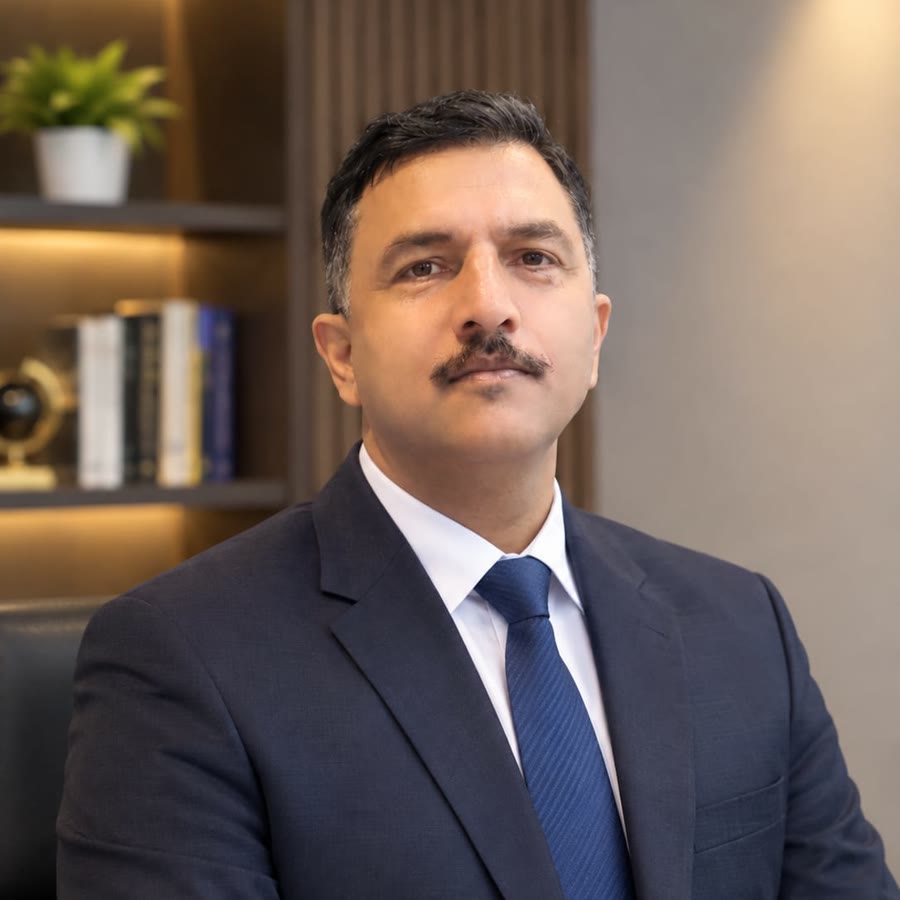
Aamir Shahzad
Director of Sales
Thirty years in drilling operations, rig management, well services and business development across Pakistan, Saudi Arabia, the UAE and North Iraq. Brings the operators and drilling contractors to the harness.

- Well and Geothermal Services


Imtiaz Ahmed
Director of Operations
Most of his career at Arabian Drilling Company, the Kingdom’s largest drilling contractor, on the rigs and in the offices that run them for the operators. The person who knows what a rig crew will and will not accept from a screen.


Aimen Malik
AI Coordinator
Coordinates the AI work across Voho’s engagements: the agents in build, the evaluations against past events, and the engineers assigned to each, so a customer has one person who knows where every piece stands.
Partner
Two decades of oilfield software, under the AI layer.
Voho works with VictorySoft on the systems-of-record side of the harness: the drilling, production and asset applications that engineers already use, which is exactly what an AI layer needs to read.

Dongying, Shandong, on the Shengli oilfield · est. 2002
The largest private software provider to the oil and gas industry in China, founded in 2002 out of the information centre of Sinopec’s Shengli Petroleum Administration Bureau. They build the digital-oilfield systems of record: the production, drilling and asset applications that an operator’s engineers work in every day. Voho is the AI layer that reads those systems, so the fit is the same shape as with any systems house, with two decades of oilfield domain depth behind it.
Runs inside Sinopec, CNPC, CNOOC. Published the first oil and gas large AI model in China, 2024. Holds CMMI Level 5, ISO 27001, ISO 9001, ISO 14001, ISO 45001, by their own attestation.
- 700+
- Employees, 100+ in R&D
- 100,000+
- Oil and gas wells served
- 500+
- Projects a year
- 9+
- Countries, since 2013
What operations and OT teams ask first.
If your question is not here, bring it to a technical session with our engineers.
01Can Voho change a setpoint or write to our control system?
No. Voho reads from SCADA, DCS and historians and never writes to the control or safety layer. The only actions it takes are in business systems such as SAP PM or Maximo, like raising a maintenance notification, and each of those waits for an engineer to approve it.
02Which systems does the harness connect to?
AVEVA / OSIsoft PI and other historians, SAP and SAP PM, IBM Maximo and other CMMS, OPC UA and MQTT sources, WITSML drilling feeds, OSDU data platforms, document systems holding P&IDs, manuals and procedures, and operational SQL databases. Where a connector does not exist yet, we build it on the same permission and audit model.
03Does our operational data leave our network?
Not unless you want it to. The harness and the models can run on your own servers, including air-gapped sites, or in a Saudi cloud region. Data stays where your policies say it must.
04Do we have to replace the models and analytics we already have?
No. Your existing physics, simulation and machine-learning models are registered as tools. The harness calls them alongside foundation models and our own time-series and vision models, and records which one produced each result.
05How do you know an agent is right before it reaches an engineer?
Every agent is evaluated on your own historical events before go-live, and continuously after it. Recommendations always carry their evidence: the tag trends, work orders and document pages they were built from, so an engineer can check them in seconds.
06Can engineers use it in Arabic?
Yes. Engineers can ask in Arabic or English, and answers cite the original documents whichever language those are written in.
07What does a first project look like?
One asset class or one workflow, connected read-only, evaluated against past events and then used on shift with approvals on. Every later use case runs on the same harness, so it starts from the connectors, permissions and evaluations already in place.